English
 Italiano
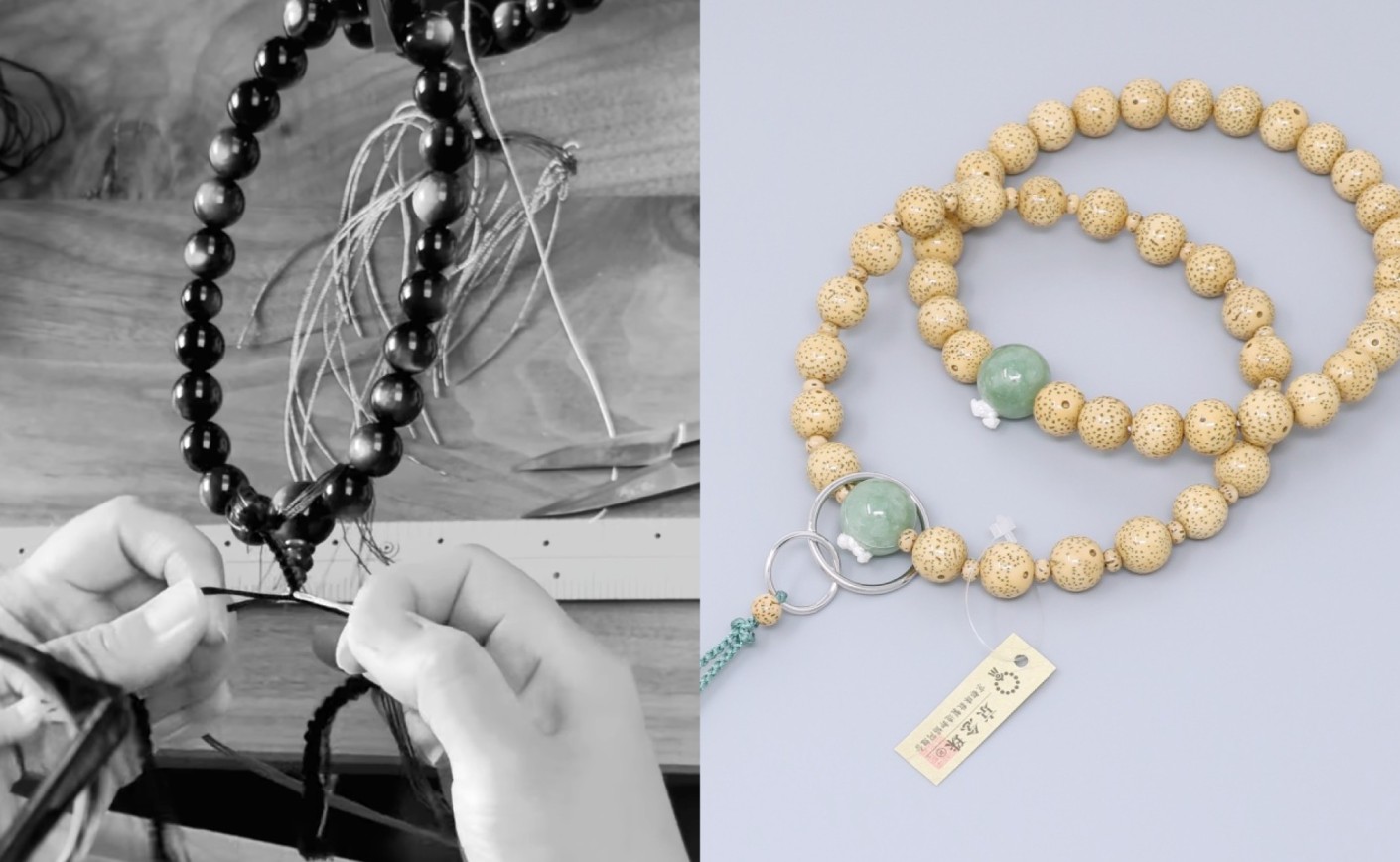
The Juzu is not just a prayer counter; it is a physical "anchor" for the mind during meditation. In Japanese practice, it acts as a bridge between the body and a state of deep concentration.
The Juzu as a Mindfulness Tool
In meditation, the Juzu serves three fundamental functions to stabilize the mind:
- Tactile Focus: Moving the beads between the thumb and forefinger creates a physical rhythm. This constant sensory stimulus helps pull the attention back to the present whenever thoughts begin to wander.
- Breath Regulation: Often, the rotation of a bead is coordinated with a full cycle of inhalation and exhalation. This transforms the rosary into a natural metronome that slows the heart rate and induces relaxation.
- Mantra and Intention: During Nenbutsu meditation (the repetition of the Buddha's name), each bead represents a pure intention. Sliding the Juzu literally means "clearing" the mind of the mental debris accumulated throughout the day.
The Technique of "K擦り" (Rubbing)
In certain traditions, such as the Jodo Shu school, the Juzu consists of two interlocking rings. During intense meditation, rubbing the beads together produces a characteristic rustling sound. This sound is not accidental; it serves to focus the sense of hearing and symbolizes the energy generated by the practice as it destroys the illusions of the ego.
Materials and Vibrations
For meditation, the choice of material is crucial:
- Wood (Sandalwood, Bodhi): Preferred for its tactile warmth and scent, which encourages a "warm" and grounded meditation.
- Stones (Quartz, Agate): Chosen for their coolness, useful for calming restless minds or for purification meditations.
In short, the Juzu transforms meditation from a purely mental act into a multisensory experience, making it easier to reach the state of "active emptiness" sought in Zen Buddhism and beyond.
The year of the Fire Horse (Hinoe-Uma), which recurs in the sixty-year cycle in 2026 (and previously in 1966), is considered a period of extraordinary energy, but also potential instability. In this context, the Juzu takes on a crucial role as a tool for balance and specific protection.
Here is how the Juzu is used to face the challenges of this particular year:
1. The Zodiac Protector: Mahasthamaprapta
According to Japanese Buddhist astrology, each sign has a protector Buddha. For those born in the year of the Horse, the guardian is Seishi Bosatsu (Mahasthamaprapta Bodhisattva).
- Use of the Juzu: During the Fire Horse year, it is recommended to use a Juzu while reciting Seishi Bosatsu’s mantra (On san zan zaku sowa ka) to appease the excess of inner "fire" and gain the wisdom needed to avoid acting on impulse.
2. Materials to Counteract Excess Fire
The Fire Horse year is characterized by an abundance of Yang energy, which can lead to irritability, hasty decisions, or burnout. The Juzu is chosen in materials that offer an energetic counterweight:
- Rock Crystal or Obsidian: For their "cold" and purifying properties, useful for shielding oneself from the chaotic energies typical of this cycle.
- Green Sandalwood: Valued for the calming effect of its scent, ideal for maintaining grounding while everything around moves rapidly.
3. Protection Against Misfortune (Yakuyoke)
Historically, the Fire Horse year is surrounded by superstitions (such as those regarding the difficult personality of women born in this year).
- The Juzu as a Shield: In Japan, the Juzu is brought to temples during Yakuyoke rituals (exorcism of bad luck) to be specifically blessed against calamities related to fire and interpersonal conflicts, which are believed to be more frequent during this period.
- The Color Red: Although red is the color of fire, wearing a small wrist Juzu with a few red beads is considered a way to "harmonize" with the year's energy instead of being overwhelmed by it, turning danger into protection.
4. The Practice of Slowness
Since the Fire Horse pushes toward rapid action and incessant movement, using the Juzu for daily meditation serves to forcefully slow down the pace. Counting the 108 beads becomes an exercise in discipline to avoid being swept away by the speed of external events.