English
 Italiano
The Aesthetics of Silence: The Noh Mask and the Soul of Japan
Noh is one of the oldest theatrical forms in the world. As a performing art passed down since the 14th century without altering its original essence, it is now recognized as a UNESCO Intangible Cultural Heritage.
Despite being a performance art, the Noh stage features no grand scenery; only a single pine tree is painted on the backdrop. It is the spectator’s imagination that transforms this void into the sea or the mountains. Wearing a mask, the actor expresses intense passions—such as grief or rage—through movements refined to their absolute essence, all within the heart of the deepest silence.
This world is governed by "Yugen": a profound, wordless beauty and a mysterious elegance. On stage, the unique aesthetics of Japan unfold, representing the very pinnacle of minimalism.
Omi-onna: A Refined and Melancholic Beauty
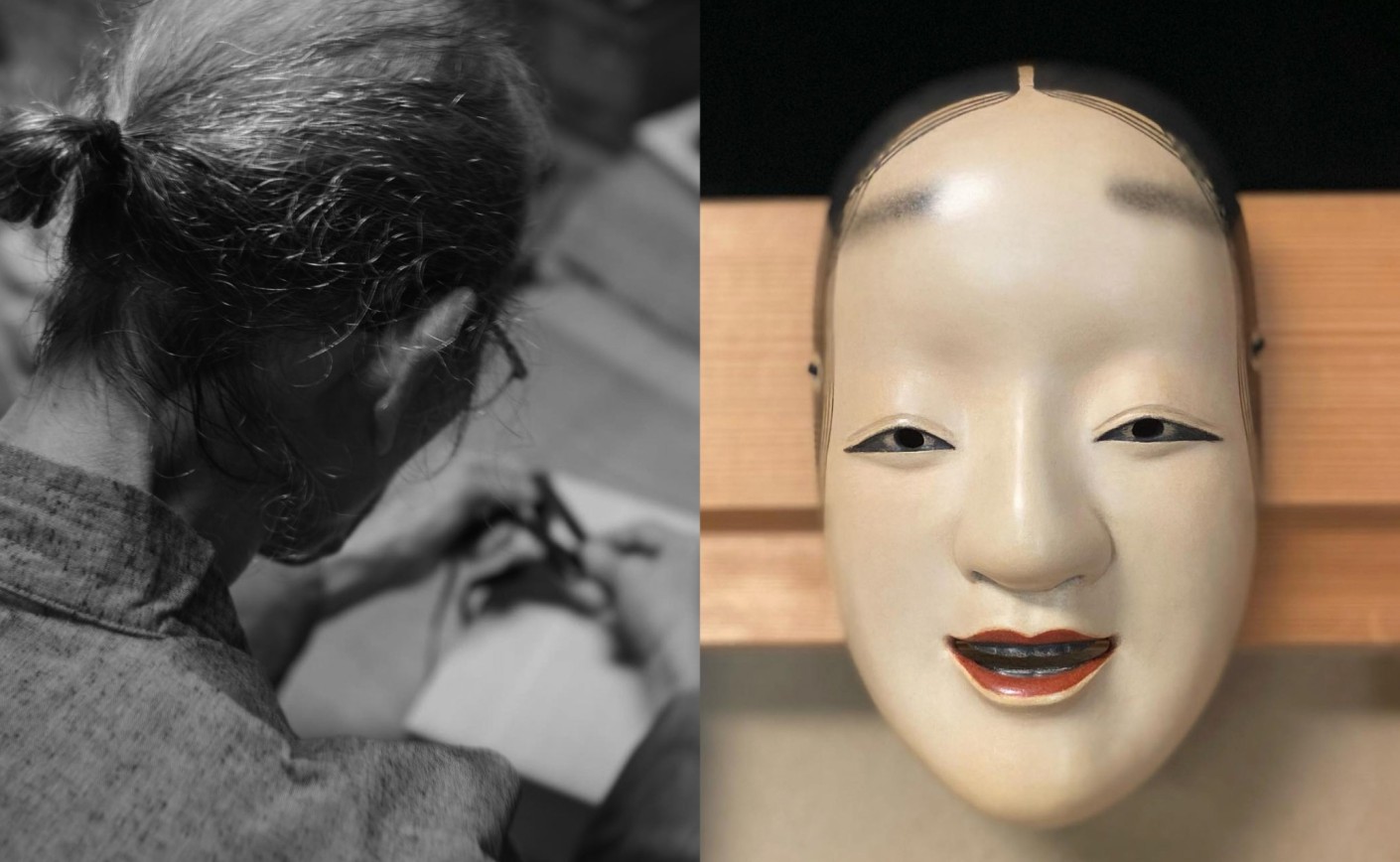
Among the various female masks, today we would like to introduce the "Omi-onna"—a masterpiece capable of evoking delicate emotions and a beauty veiled in shadow.
While there are masks depicting innocent young girls, such as the Ko-omote, or noble women like the Waka-onna, the Omi-onna is distinguished by its emotional realism. Her slightly hollowed cheeks and the subtle shadows around her eyes reveal more than just youth; they reflect the melancholy of a woman who has known the hardships of life and the torments of love. It is a face that emanates a magnetic charm—an inner passion that goes far beyond simple purity.
In Noh theater, an expression changes with a tilt of the head: looking upward (Teru) creates a faint suggestion of a smile, while looking downward (Kumorasu) evokes a profound weeping. The Omi-onna is one of the masks where this transformation appears most dramatic, which is why it is primarily used to portray possessed women or spirits.
The Breath of Life Imbued by the Master
This Omi-onna mask is the work of Master Kamei, who boasts over thirty years of experience in the art of mask carving. Each piece is hand-carved from a single block of wood—a meticulous process requiring months of labor. It is a jewel of craftsmanship in which one can sense life itself, infused by the artist’s touch.L'Estetica del Silenzio: La Maschera Noh "Omi-onna" e l'Anima del Giappone
Il "Noh" è una delle forme teatrali più antiche del mondo. Si tratta di un'arte scenica tramandata dal XIV secolo senza alterarne la forma originaria, oggi riconosciuta come Patrimonio Immateriale dell'Umanità dall'UNESCO.
Nonostante sia un'arte performativa, il palcoscenico del Noh non prevede scenografie imponenti; vi si trova solo un pino dipinto sullo sfondo. È l'immaginazione dello spettatore a trasformare quel vuoto in mare o in montagna. L'attore indossa una maschera e, attraverso movimenti ridotti all'essenziale, esprime passioni intense — come dolore o rabbia — nel cuore del silenzio più profondo.
È un mondo retto dallo "Yugen": una bellezza profonda e indicibile, un'eleganza misteriosa. Sul palco si dispiega l'estetica unica del Giappone, l'apice del minimalismo.
Omi-onna: Una Bellezza Malinconica e Raffinata
Tra le maschere femminili, oggi desideriamo presentarvi la "Omi-onna", un capolavoro capace di evocare emozioni delicate e una bellezza velata di ombra.
Mentre esistono maschere che ritraggono fanciulle innocenti, come la "Ko-omote", o donne nobili come la "Waka-onna", la Omi-onna si distingue per il suo realismo emotivo. Le guance leggermente scavate e l'ombra sottile negli occhi non mostrano solo giovinezza, ma la malinconia di una donna che ha conosciuto le fatiche della vita e i tormenti dell'amore. È un volto che emana un fascino magnetico, una passione interiore che va ben oltre la semplice purezza.
Nel teatro Noh, l'espressione cambia con l'inclinazione: rivolgerla verso l'alto ("Teru") crea un accenno di sorriso, mentre abbassarla ("Kumorasu") evoca un pianto profondo. La Omi-onna è una delle maschere in cui questo mutamento appare più drammatico, ed è per questo utilizzata principalmente per interpretare donne possedute o spettri.
Il Soffio Vitale impresso dal Maestro
Questa maschera Omi-onna è un'opera del Maestro Kamei, che vanta oltre trent'anni di esperienza nell'arte della scultura delle maschere. Ogni pezzo è intagliato a mano partendo da un unico blocco di legno, un processo meticoloso che richiede mesi di lavoro. È un gioiello di artigianato in cui si percepisce la vita stessa infusa dal tocco dell'artista.